

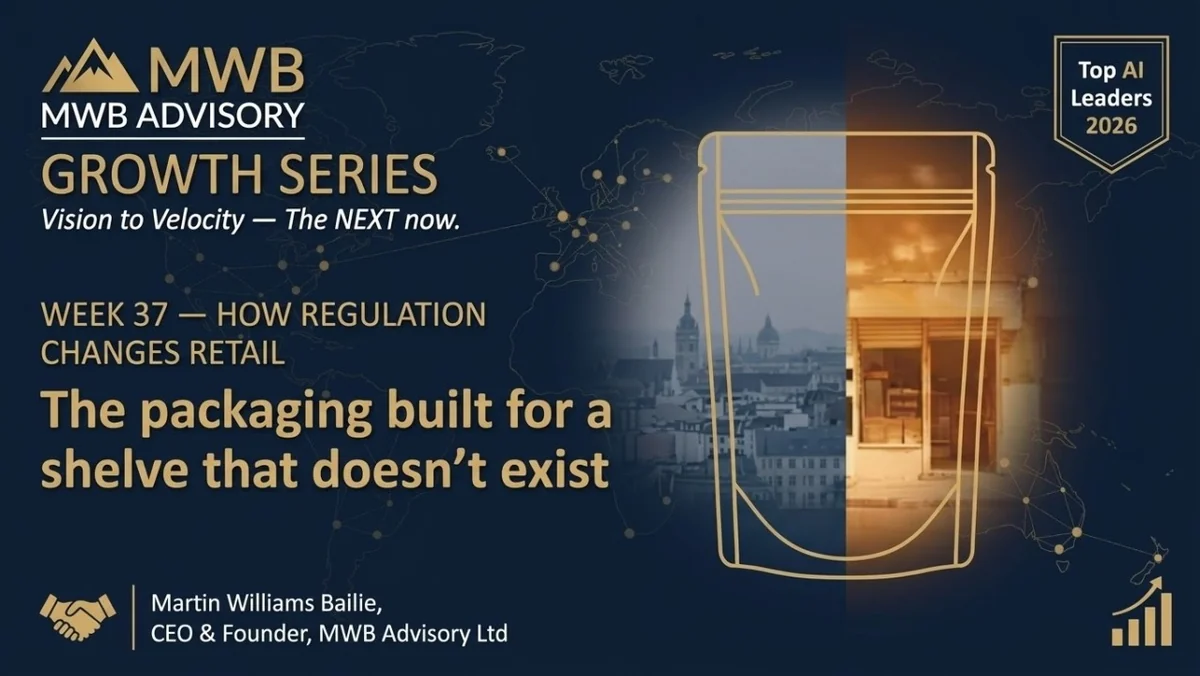
The Growth Series 2026 | Week 37: How regulation changes retail – The Packaging Built for a Shelf That Doesn't Exist
Martin Bailie CEO & founder MWB advisory Ltd
The Growth Series 2026 | Week 37: How regulation changes retail – The Packaging Built for a Shelf That Doesn’t Exist
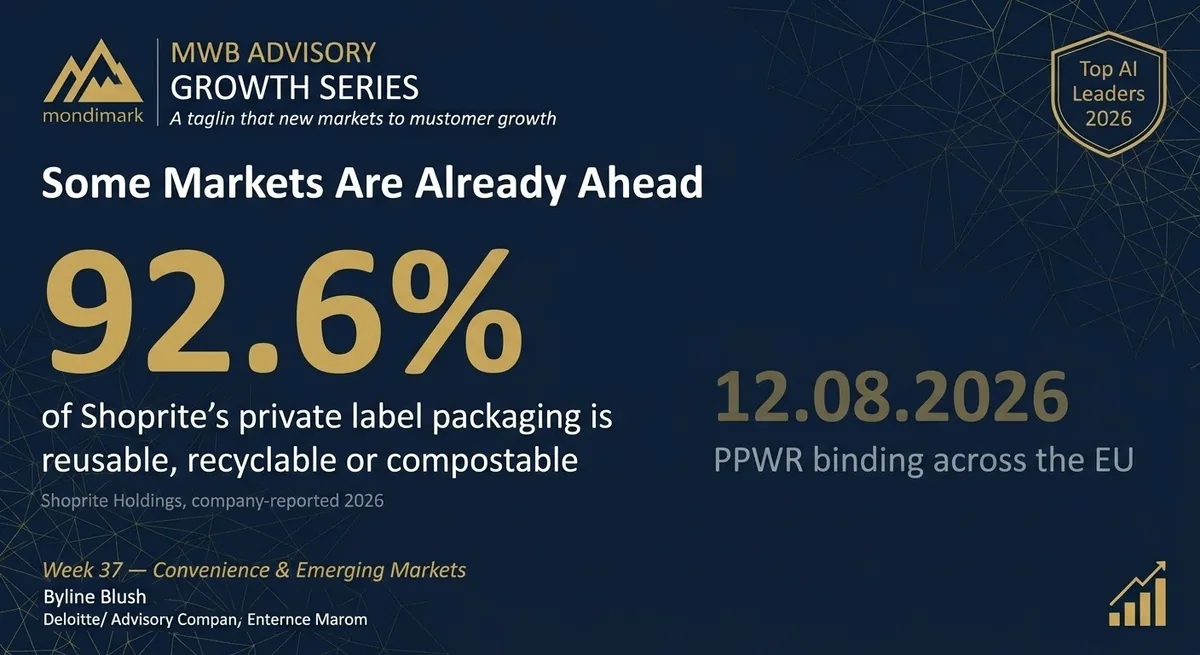
On 12 August 2026, the EU Packaging and Packaging Waste Regulation (PPWR) became binding law across all twenty-seven member states. No transposition period, no national variance. One packaging spec, enforced everywhere at once.
“Cost of inaction: every quarter this stays unexamined is another quarter of packaging decisions locking in against a shelf that only exists in one of the four regions in this framework, for both the retailer stocking it and the packaging company that built it.” — Martin Bailie
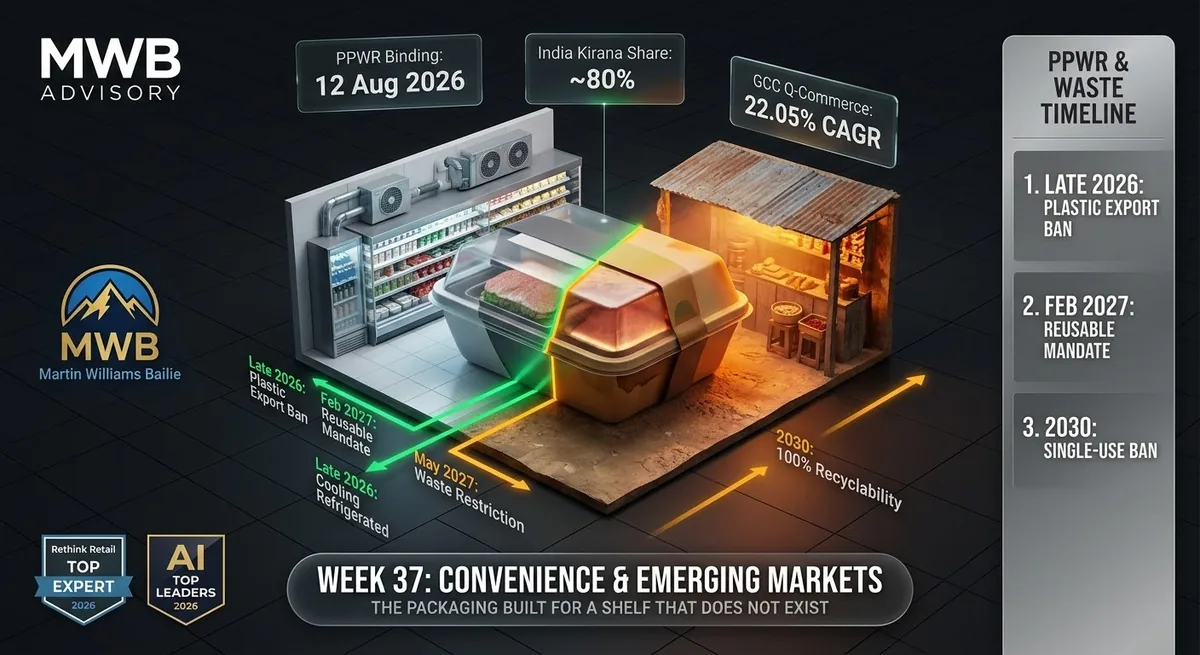
The Regulatory Countdown: The Four Hard Dates
The regulatory squeeze is not a distant 2030 aspiration; it is an immediate operational cascade that locks in procurement cycles right now:
Late 2026 (The Developing Market Export Ban): A total ban on exporting plastic waste to non-OECD (developing) countries takes effect. The safety valve of shipping domestic plastic waste offshore closes permanently. CPG brands and packaging converters are forced to redesign materials for local circularity immediately.
February 2027 (The Front-of-Store Reuse Mandate): Takeaway food and drink establishments must legally accept customer-owned mugs, cups, and food containers. Convenience food-to-go counters and quick-service forecourts face a direct operational disruption in hygiene handling, portion control, and speed of service.
May 2027 (The Non-Hazardous Waste Squeeze): Exports of non-hazardous waste to non-OECD countries are heavily restricted, tightening the secondary raw material supply chain and increasing the cost of compliant recycled polymers.
2030 (The Recyclability Wall): Certain single-use plastics are banned entirely, and 100% of all packaging placed on the market must be fully recyclable (clearing Recyclability Grade C or better).
The Bailie Perspective
“Every board deck treats PPWR as a European compliance exercise. That is a dangerous operational blind spot. Global procurement works on scale, which means the specification built to clear Brussels’ 2030 gate is the exact specification that gets procured for Cairo, Mumbai, and Johannesburg. If that mono-material pouch fails in the supply chain, the write-off doesn’t happen in Frankfurt. It happens on your emerging-market balance sheet.” — Martin Bailie
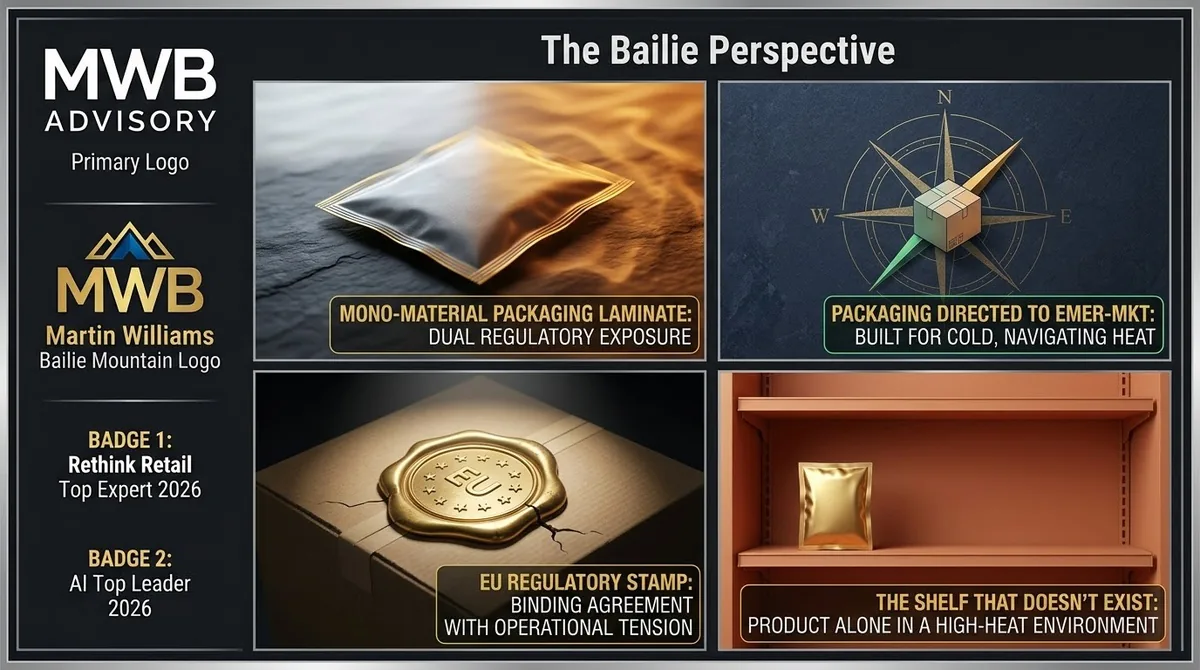
Global brands do not run separate packaging lines for separate markets if they can avoid it. One mono-material laminate, engineered to hit PPWR’s 2030 recyclability grade, gets scaled into procurement everywhere the brand sells. That is not speculation; it is how packaging economics has always worked. Nobody in Brussels was asked what happens when that same laminate reaches a kirana store in Lucknow, a spaza shop outside Johannesburg, or a fuel-station convenience counter in Riyadh, where the barrier properties that protected shelf life in a temperate EU cold chain now have to survive forty-degree heat, patchy refrigeration, and a distribution chain that can run for weeks rather than days.
I built private label into a business that did not have the luxury of assuming any of that infrastructure existed. At Star Bazaar, own-brand went from four percent of the range to thirty-eight percent in two years, and every packaging decision we made had to survive Indian heat, Indian logistics, and Indian shelf realities before it survived anywhere else. Nobody in Europe was engineering a laminate for that shelf. We had to.
That is the gap I want to open this week. Not a story about Europe versus everyone else. A story about whether the retailers running the fastest-growing convenience and retail channels on the planet are stress-testing the packaging Europe is about to hand them, or simply accepting it because it is what the global supply chain now defaults to.
The Four-Lens Regional Framework
Europe (The Global Spec Dictator): PPWR is now directly applicable law across all 27 member states as of 12 August 2026. 2028 brings a 50% void-space cap on secondary and e-commerce packaging alongside mandatory harmonized sorting labels. 2030 is the hard gate: anything grading below Recyclability Grade C is barred from the EU market outright, alongside bans on single-use produce packaging under 1.5kg and mandatory PCR content minimums. This is the regulation setting the packaging spec that gets exported everywhere else.
India & Asia (The Ambient Stress Test): Kirana stores number over 12 million and are estimated to carry roughly 80% of India’s FMCG sales. India’s retail market is projected to grow from $1.06 trillion in 2024 to $1.93 trillion by 2030 (Deloitte/FICCI). This is the scale at which a packaging mismatch would actually be felt, distributed across millions of small-format, high-frequency outlets running on infrastructure nothing like an EU cold chain.
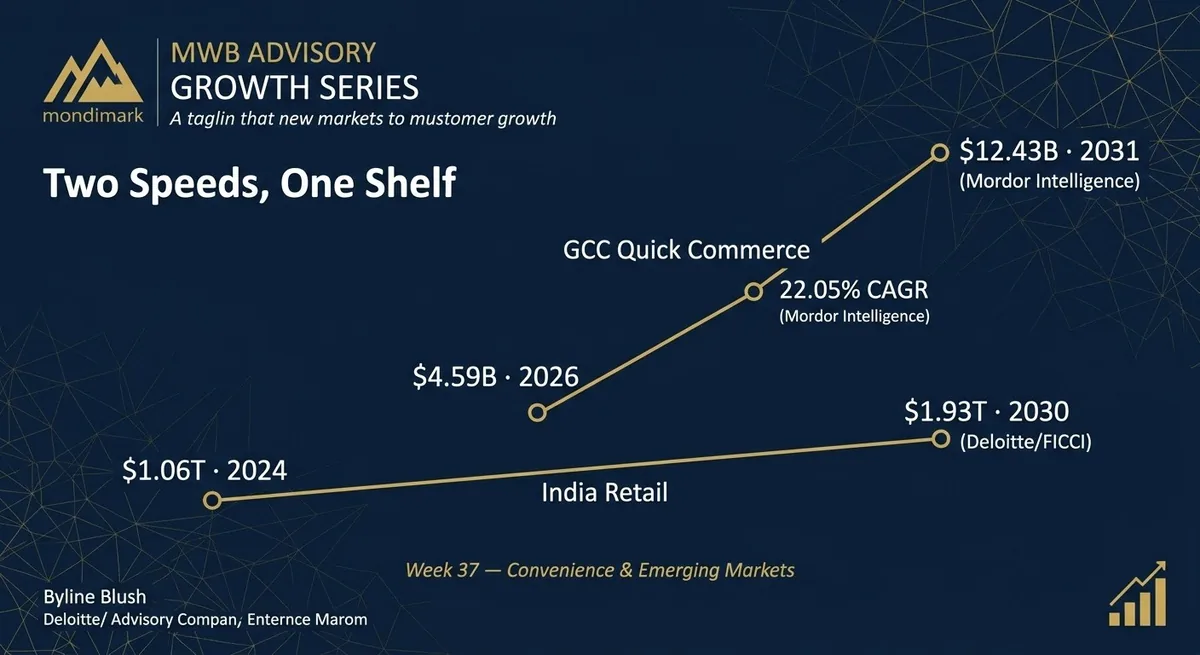
GCC (The High-Heat Quick-Commerce Testbed): Quick commerce in the Gulf is projected to grow from $4.59 billion in 2026 to $12.43 billion by 2031 at a 22.05% CAGR (Mordor Intelligence). Saudi convenience retail is reported at SAR 6.3 billion, up 7% in 2025. This is the fastest-growing lens and the most exposed to a straight import of European packaging assumptions with no adaptation.
United States (The Foodservice Consolidation): 151,975 convenience stores in operation, down 0.2% year on year. Foodservice now drives 28.5% of in-store sales ($341.2 billion) inside an $817.5 billion industry (NACS/NIQ TDLinx, NACS State of the Industry, 2026). It is the lens least directly exposed to PPWR, though facing a domestic risk of a growing patchwork of state-level Extended Producer Responsibility (EPR) laws.
Some Markets are already ahead- Case Studies
ADNOC Distribution Distribution × noon Minutes (GCC): Fulfilment integrated across 551 fuel stations and 373 Oasis convenience stores, tied to the ADNOC Rewards programme. A live example of the convenience format absorbing quick-commerce infrastructure at scale.
5Minutes2Town (5M2T-South Africa): Direct distribution to more than 60,000 geo-located spaza shops a month. This is what reaching the actual informal convenience channel looks like when you build for it directly.
Reliance Retail (India): Operating 20,169 stores with Rs 3,70,026 crore gross revenue in FY25-26. In June 2026, Reliance announced a new manufacturing platform aimed specifically at fresh produce cold-chain and sourcing to cut waste—building the cold chain European specs assume exists.
The Shoprite Group of Companies (Africa): 92.6% of total private label packaging is now reusable, recyclable, or compostable, company-reported ahead of target. A proof point that leading emerging players are establishing high circularity standards natively.
Kallikor × Morrisons (UK): Deployed across 500 supermarkets and 1,700 convenience stores, reporting up to 65% reduced disruption risk and 15–25% efficiency gains on its digital twin automation platform.
Proving the necessity of simulating operational shifts before committing capital.
Reality Check: Unfiltered Board Room Realities
The Cascade Assumption Remains Unproven: The argument that EU packaging specs automatically flow into non-EU procurement is currently sourced to compliance vendors and consultancy blogs, not to a named primary research house. It is directional, not yet quantified.
Informal Trade Dominance: An estimated 70% to 80% of retail activity across parts of Africa runs through informal trade. A packaging cascade running through formal multinational procurement structurally cannot reach most transactions happening on the continent.
Emerging Market Leadership: Shoprite’s 92.6% circular packaging metric invalidates the simple narrative of emerging markets merely catching up. The collision is real in specific cold-chain and barrier-dependent categories, but it is not universal.
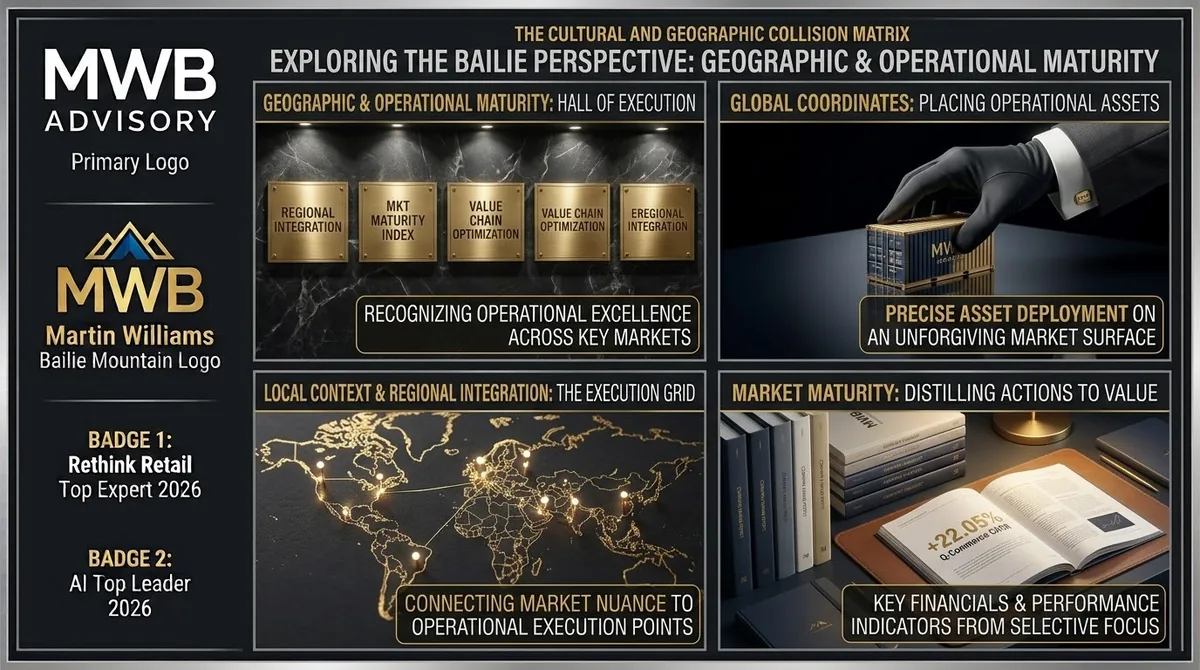
Key Performance Indicators & Market Benchmarks
EU PPWR Binding Date: 12 August 2026 across all 27 EU member states | Source: European Commission / MWB Advisory
Non-OECD Plastic Waste Export Ban: Late 2026 total ban enforcement | Source: EU Waste Shipment Regulation
Mandatory Takeaway Reusables: February 2027 customer-container acceptance mandate | Source: EU Circular Economy Directives
Non-Hazardous Waste Export Restrictions: May 2027 heavy regulatory restrictions | Source: EU Waste Shipment Framework
100% Recyclable Packaging & Plastic Bans: 2030 full enforcement hard gate | Source: EU PPWR Enacted Text
India FMCG Channel Share: 12M+ kirana stores accounting for ~80% of FMCG sales | Source: Aggregator estimate (IBEF)
India Retail Market Expansion: $1.06T (2024) to $1.93T (2030) | Source: Deloitte / FICCI
US Convenience Store Count: 151,975 stores (-0.2% YoY) | Source: NACS / NIQ TDLinx
US C-Store Foodservice Volume: $341.2BN (28.5% share of $817.5BN total market) | Source: NACS State of the Industry
GCC Quick-Commerce Market (2026–2031): $4.59BN to $12.43BN (22.05% CAGR) | Source: Mordor Intelligence
Shoprite Private Label Circularity: 92.6% reusable, recyclable, or compostable | Source: Shoprite Holdings
Kallikor / Morrisons Disruption Risk Reduction: Up to 65% reduction via digital twin simulation | Source:
Retail Tech Innovation Hub
The 18-Month Board Take
The Retailer CEO:
I’ve carried full P&L accountability as a CEO and COO across three continents, so I’ll say the quiet part first: when imported packaging fails on your shelf, it isn’t the packaging company that eats it, it’s you. Dehydrated produce, spoiled chilled dairy, and customer complaints land on your shrink line and your brand, not your supplier’s. And it lands hardest in convenience, the channel with the thinnest margins and the least room to absorb a markdown.
Stop accepting the global CPG default pack spec on faith. Demand a regional variant tested against your own climate, cold-chain, and distribution reality before it’s on your shelf, not after the first shrink report.
Put shrink-rate SLAs tied to specific pack formats into supplier contracts, not just price and case fill. If a supplier’s mono-material switch increases your spoilage, that cost should sit contractually where the decision was made.
Stop treating “informal trade” as one category. The 5M2T model in South Africa and the kirana channel in India are different distribution problems requiring different solutions, and a European packaging spec was never built with either one in mind.
Reliance’s investment in fresh-produce cold-chain manufacturing infrastructure is the retailer playbook: build the infrastructure the packaging assumes exists, rather than waiting for a supplier to solve it for you. Treat the $1.93 trillion India retail forecast and the 22% GCC quick-commerce CAGR as exposure, not just opportunity.
The Packaging Company CEO:
You’re being pulled two ways at once. Your biggest customers want one global SKU because separate tooling and separate lines destroy your unit economics. But a laminate engineered to clear a 2030 EU recyclability grade and nothing else will underperform on barrier protection the moment it leaves a temperate cold chain, and when it fails, the retailer will call it your engineering problem, not their climate.
The moat isn’t compliance, it’s compliance without sacrificing barrier performance. Amcor’s recycle-ready AmLite HeatFlex pouch is a real proof point that mono-material and barrier performance aren’t automatically a trade-off.
Mondi’s banana-box collaboration with Europcell and Ecuadorian exporter Incarpalm, built specifically for the under-1.5kg produce ban, shows the harder and more valuable move: engineering for a specific export corridor and climate, not a single global default.
Don’t let “one global spec” become the default answer just because it’s the cheapest one to sell internally. The companies already engineering for specific corridors, not a single EU-first spec, are the ones best placed to win the next contract renegotiation when a retailer’s shrink numbers come in.
The Growth Series Roadmap
Week 34: Grocery – The Label Dividend & The Label Equity Audit.
Week 35: Fashion & Apparel – The Undiscoverable Estate & The Discoverability Audit.
Week 36: General Merchandise & Fulfilment – After the Click: In the Age of the Shopping Agent.
Week 37: Convenience & Emerging Markets – The Packaging Built for a Shelf That Doesn’t Exist.