




The Growth Series 2026 | Week 35: Fashion & Apparel – The Undiscoverable Estate
Martin Bailie CEO & founder MWB advisory Ltd
The Bailie Perspective
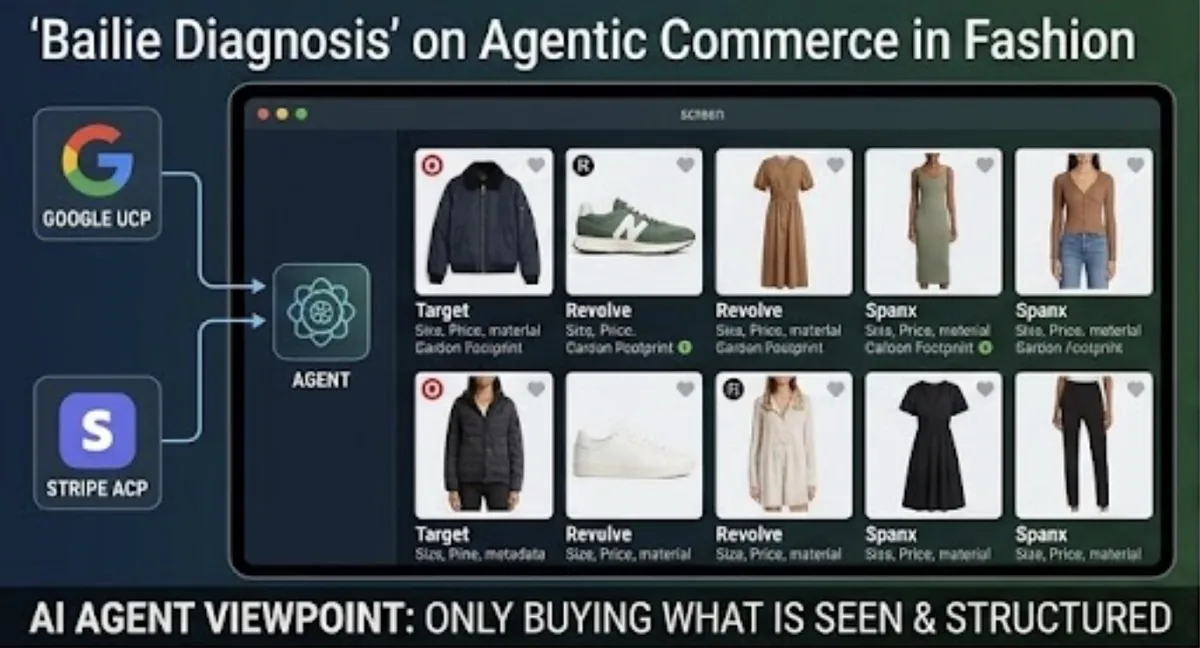
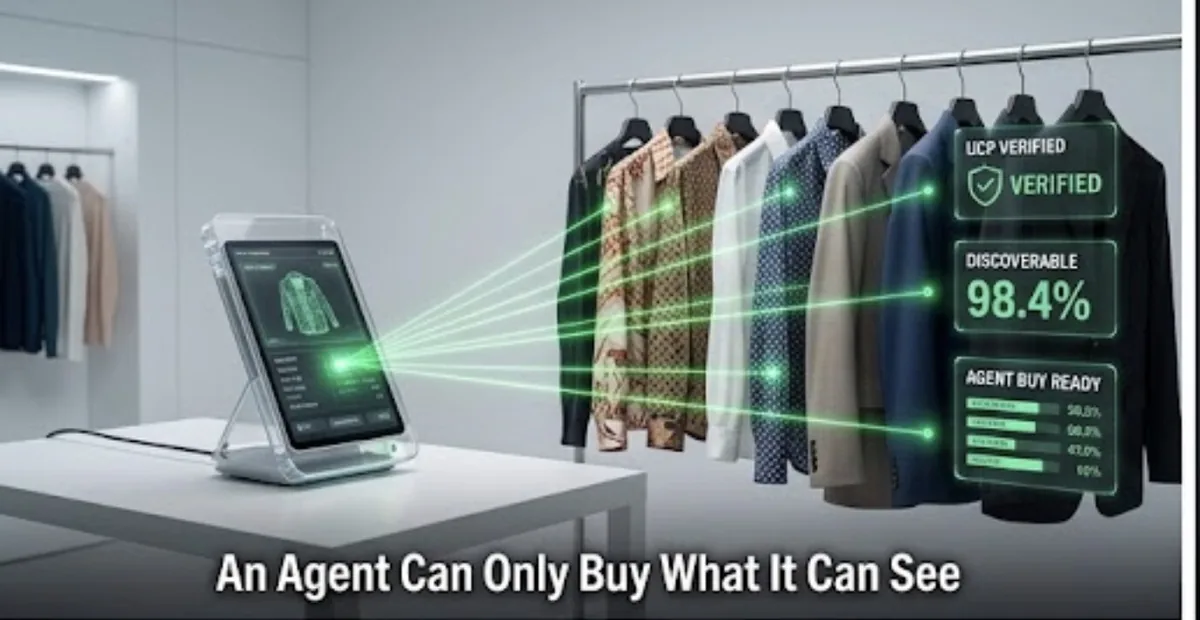
Two protocols are now competing to become the rail every AI shopping agent uses to buy fashion. Google’s Universal Commerce Protocol launched at NRF 2026 with Shopify Etsy , Wayfair , Target , and Walmart attached. Stripe ‘s Agentic Commerce Suite already carries Coach , kate spade new york , REVOLVE , Spanx , and the URBN family. Every brand plugging into either is making the same trade: hand over structured data and a slice of margin, in exchange for being findable by a machine that now stands between the retailer and the customer.
I sat on the Primark board while this exact tension was being decided the other way. Primark has 70% of its 16,000-product range online now, and 80% of that range still gets almost no engagement. The business still will not sell through its own app, maintaining click-and-collect only. That is not a laggard’s decision. It is a deliberate bet that discovery happens on the shop floor, not in a search index, and that the economics of a low-margin, high-volume model cannot absorb what agentic platforms charge for visibility.
The question every fashion board should be asking this quarter is not whether to join UCP or ACP. It is which parts of the estate were built to be found by an algorithm, which parts were built to be found by a human standing in front of a rail of stock, and whether that second category is a strategic moat or a blind spot nobody has priced yet.

The Four-Lens Regional View
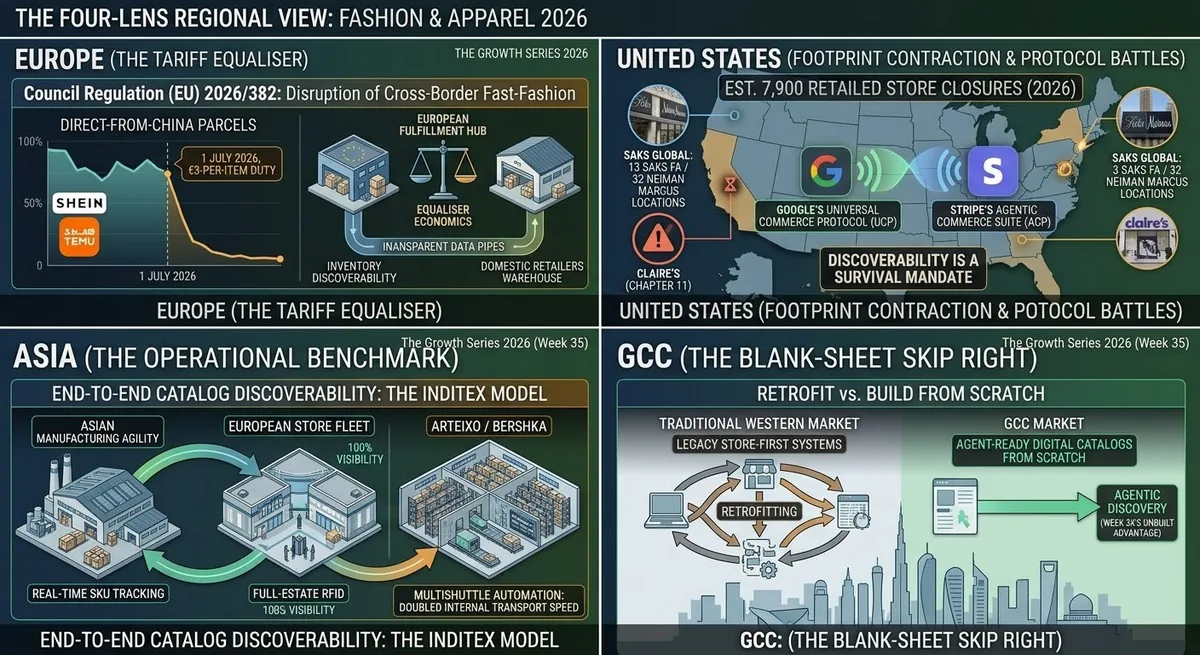
Europe (The Tariff Equaliser): Europe has removed the regulatory loophole that allowed cross-border fast-fashion platforms to bypass domestic discoverability disciplines. The EU’s interim €3-per-item duty on parcels under €150 took effect 1 July 2026 under Council Regulation (EU) 2026/382, disrupting direct-from-China cross-border models. As SHEIN and Temu build local European fulfillment hubs to adapt, they must operate under the exact same inventory discoverability and catalog economics as domestic retailers.
United States (Footprint Contraction & Protocol Battles): With an estimated 7,900 store closures across retail in 2026, discoverability is a survival mandate. Global has consolidated its physical footprint to 13 full-line Saks Fifth Avenue stores and 32 Neiman Marcus locations, while Claire’s has filed for Chapter 11 protection. Concurrently, the battle between Google’s UCP and Stripe’s ACP is being contested across US digital rails.
Asia (The Operational Benchmark): Inditex provides the counter-model to physical-only bets, bridging Asian manufacturing agility with European store fleets. Full-estate RFID tracks the garment base across retail networks, while multishuttle automation at Arteixo and Bershka facilities has doubled internal box transport speeds. This represents end-to-end catalog discoverability: every SKU is tracked in real time across stores and distribution centers.
GCC (The Blank-Sheet Skip Right): GCC fashion retail is scaling agentic discovery faster than Western markets because it carries minimal legacy store-first systems. Regional operators are building agent-ready digital catalogs from scratch rather than retrofitting legacy systems—a prime demonstration of Skip Rights from Week 33’s Unbuilt Advantage framework.
The Discoverability Audit
This diagnostic extends the Bailie Agility Framework (Week 32) and the Unbuilt Advantage Audit (Week 33). Before deciding how to scale digital investments, boards must audit three critical pillars:
1. Catalog Debt: What percentage of your SKU range has structured, machine-readable data today? PwC Strategy& research shows AI agents are being adopted first in shoes, denim, trousers, sportswear, and basic essentials; catalog debt in these high-velocity categories carries an immediate loss of market visibility.
2. Rail Choice: Which agentic protocol (UCP, ACP, or proprietary APIs) will you plug into, and what commercial margin and customer data leave the building in exchange for search visibility?
3. Anchor Value: What unique discovery experience does your physical store provide that no autonomous protocol can replicate? If the physical space offers no differentiated sensory or tactile value, the store is a real-estate liability waiting to be exposed. If it offers authentic engagement, it is a moat to be defended.
Excellence in Case Studies
Inditex (Full Discoverability Commitment): Real-time RFID garment tracking links into twice-weekly restocking cycles and a single unified inventory pool. Automated picking robotics handle omnichannel fulfillment from whichever physical or central node makes the most logistical sense.
Primark (Deliberate Physical Restraint): Deployed a digital app across select European markets that deliberately excludes checkout, focusing strictly on local store inventory visibility. ABF leadership treats digital as a footfall-driving marketing channel rather than a direct sales line, keeping fulfillment friction off the balance sheet.
CreateMe & Sewbo (Automated Agile Production): Automated robotic sewing and adhesive assembly are addressing the soft-goods handling bottlenecks of apparel manufacturing. The ARM Institute demonstrated robotic automation handling over 50% of jeans assembly operations, paving the way for on-demand, small-batch manufacturing triggered directly by agentic demand signals.
Reality Check: Unverified Narratives
AI Search Surge Claims: Widely circulated claims that AI shopping searches surged 4,700% originate from secondary aggregators rather than primary verified reports; treat with caution until primary methodology is audited.
Full-Price Sell-Through Figures: Assertions that Zara Fashion achieves an 85% full-price sell-through rate under secret AI initiatives originate from third-party commentary rather than verified Inditex financial disclosures.
Smart Mirror Speculation: Rumors of widespread 2027 smart-mirror instant tailoring rollouts in fashion flagships remain speculative industry commentary rather than confirmed commercial roadmaps.
Key Performance Indicators & Market Benchmarks
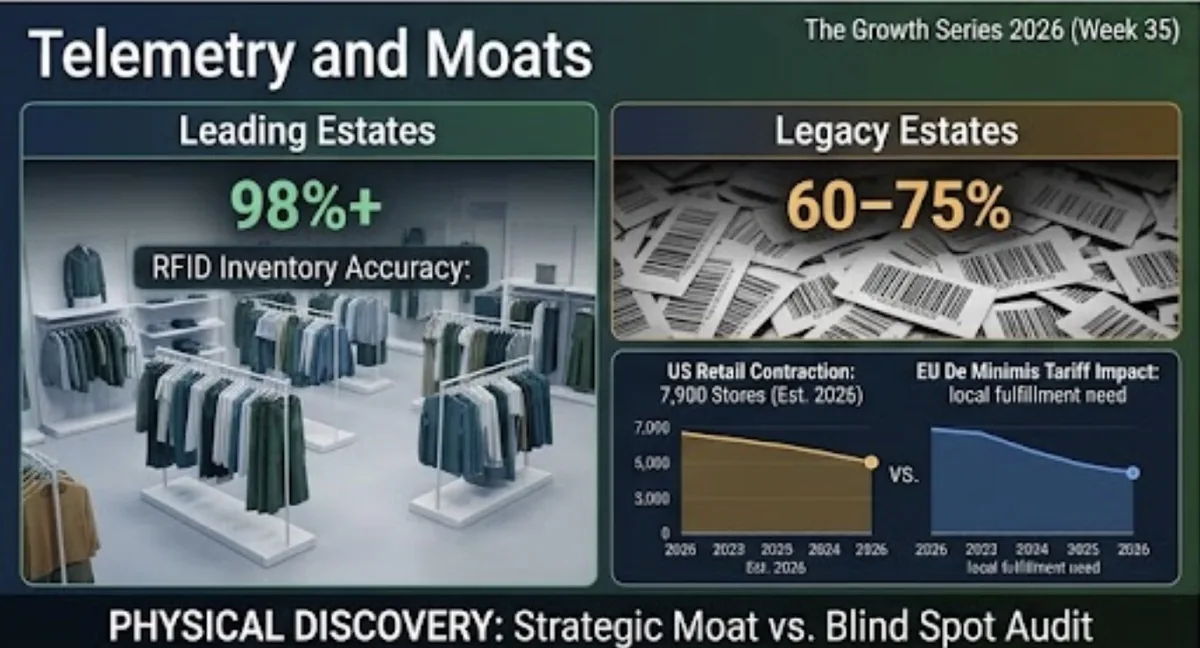
RFID Inventory Accuracy: 98%+ real-time visibility across leading estates (vs. 60–75% for legacy barcode systems) | Source: Industry Benchmark Data
US Retail Store Closures (2026): ~7,900 estimated closures across all categories | Source: Analyst Consensus
EU De Minimis Parcel Duty: €3 per item under Council Regulation (EU) 2026/382 | Source: European Council
Primark Catalog Exposure: 70% of 16,000 SKUs visible online (~80% driving minimal engagement) | Source: Corporate Disclosures
Agent-First Purchase Intent: 25% of European consumers (DE/AT) receptive to buying apparel via AI agents | Source: Consumer Survey Data
Robotic Jeans-Seam Assembly: >50% automated handling in pilot environments | Source: ARM Institute / Sewbo
The 18-Month Board Take
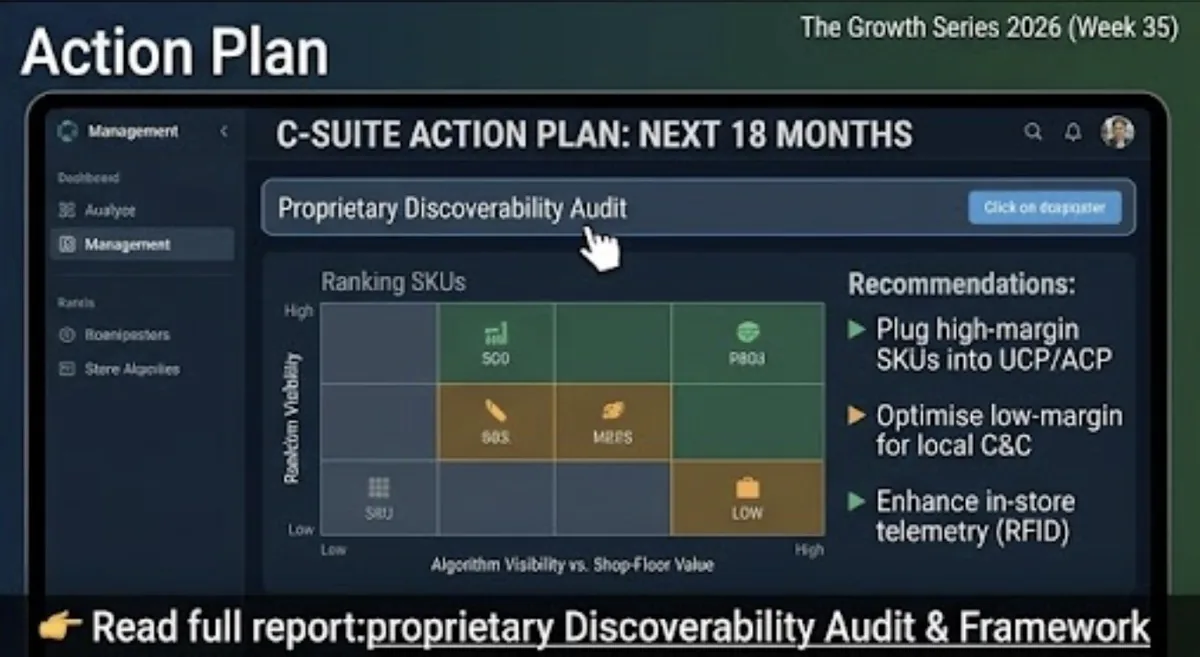
Chief Product / Merchandising Officer: Run the Discoverability Audit across your top 200 revenue-generating SKUs. Immediately eliminate Catalog Debt across agent-first categories (denim, footwear, trousers, sportswear, basics) to ensure products are machine-readable. (Cost of Inaction: Complete invisibility in the fastest-growing digital discovery channels).
Chief Financial Officer: Model the exact margin dilution and data tolls of connecting to agentic commerce rails (UCP vs. ACP). Benchmark this against the quantified Anchor Value generated by your physical stores. (Cost of Inaction: Ceding margin to third-party rails without verifying incremental sales lift).
General Counsel: Scrutinise customer data-sharing provisions and platform exclusivity clauses in UCP/ACP partner agreements before signing. Protect first-party customer ownership. (Cost of Inaction: Permanently surrendering customer relationship equity to platform gatekeepers).
Week 33–36: The Executive Roadmap
Week 33: Convenience & Emerging Markets – The Unbuilt Advantage.
Week 34: Grocery – The Label Dividend & The Label Equity Audit.
Week 35: Fashion & Apparel – The Undiscoverable Estate & The Discoverability Audit.
Week 36: General Merchandise & Fulfilment – Autonomous Logistics Rotation.