



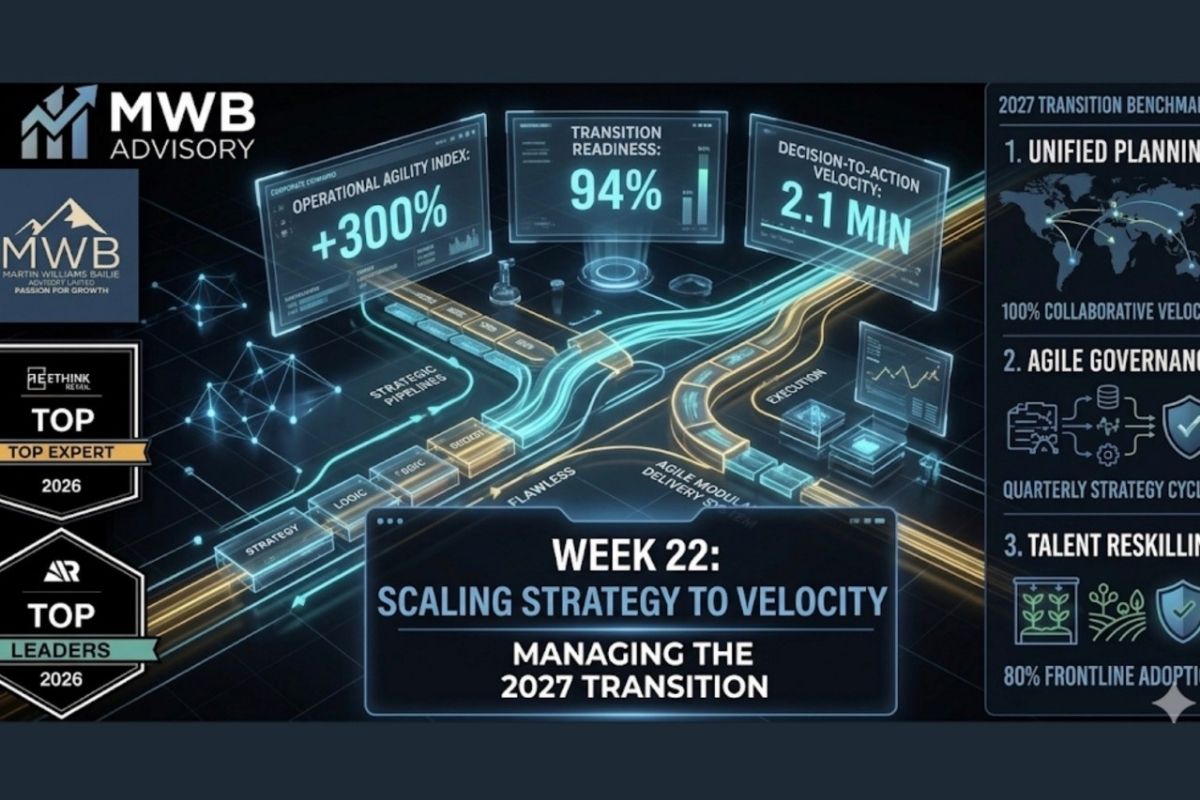
The Growth Series 2026 | Week 22: Scaling Strategy to Velocity – Managing the 2027 Transition
Martin Bailie CEO & founder MWB advisory Ltd

The Growth Series 2026 | Week 22: Scaling Strategy to Velocity – Managing the 2027 Transition
We have spent the last few weeks dissecting the architectural blocks of the “Agentic Leap”—from building highly localised, decoupled sourcing structures to executing friction-free frontline operations inside the Connected Store. But as we look toward the horizon of 2027, global leadership teams face their most critical, existential challenge: Execution at Scale.
The finest boardroom blueprint is entirely worthless if your organisational velocity cannot keep pace with market volatility.
Transitioning an enterprise from localised, isolated AI pilot projects to an all-encompassing, agentic business engine requires a deliberate shifting of corporate gears. It demands that the C-suite fundamentally restructures how corporate strategy is formulated, governed, and ultimately scaled across the frontline.

The Bailie Perspective

“The structural bottleneck to scaling strategy in 2026 isn’t the technology—it’s the corporate calendar. Too many retail organisations are trying to run real-time, agentic operations while remaining entirely trapped in rigid, twentieth-century annual planning cycles. If your corporate strategy only updates every twelve months, but your autonomous shelf-edge and supply chain systems are making optimised decisions every twelve seconds, you create an operational friction point that systematically destroys margin. MWB Advisory
“To manage the 2027 transition, leadership must unlearn the comfort of the static long-range plan and relearn how to manage continuous strategic velocity. Strategy and execution can no longer be treated as separate, sequential corporate phases; they must operate as a singular, fluid loop. Scaling means ensuring that your boardroom governance moves at the exact same tempo as your machine-driven frontline execution.” Martin Bailie

Global Frameworks: Navigating Regional Retail Realities
Scaling a centralised strategy across an international footprint requires an acute understanding of regional nuances. Leadership cannot copy-paste a scaling playbook; they must tune their agentic operating systems to local corporate speeds and distinct consumer environments:
1. North America: Scaling Through Rapid Monetisation & Labor Reallocation
In the hyper-competitive US market, scaling strategy is intensely focused on direct operational ROI and immediate margin protection. The primary barrier to scale here is legacy store architecture and labor friction. Best-in-class US retailers are scaling by embedding agentic software directly into frontline mobile devices, bypassing complex corporate training. The focus is on rapid, high-margin monetisation—using automated real-time systems to optimise promotional velocity and reallocate labor away from administrative tasks toward high-touch customer conversion.
2. Europe: Scaling via Unified Regulatory Governance & Agility
Driven by strict legislative landscapes (such as upcoming sustainability directives and data compliance Digital Product Passport & GS1), European operators approach scaling through the lens of governance. Here, strategy must scale within strict boundaries. Leading European multi-channel brands are utilising quarterly strategy cycles to balance agility with compliance. Scaling means deploying centralised, agentic clouds that automate compliance reporting on the fly, freeing regional store teams to focus entirely on local execution and waste mitigation without overstepping regulatory guardrails.
3. Asia: Eco-System Integration at Sovereign Scale

Across major Asian retail hubs—particularly in China and Japan—scaling strategy requires tapping into pre-existing, massive digital ecosystems. Strategy doesn’t scale via isolated corporate apps; it scales through deep integration with regional super-apps and automated supply networks. Strategic velocity is exceptionally high because consumers and frontline workforces are inherently digitally native. The corporate challenge in Asia is ensuring machine-to-machine coordination can handle hyper-local shifts in demand without creating central distribution logjams.
4. GCC: High-Velocity Luxury and Digital Transformation
In the GCC, scaling strategy is fast-tracked by ambitious state-led economic transformations and an affluent consumer base that demands ultra-premium service. Retailers here are unburdened by legacy systems, allowing them to leapfrog directly to pure agentic infrastructure. Scaling strategy to velocity in this region centers on luxury asset optimisation and predictive inventory allocation. Boardrooms are scaling their operations at a rapid pace, aligning corporate expansion directly with real-time, premium customer data.
The Executive Mandate: Re-Architecting for 2027
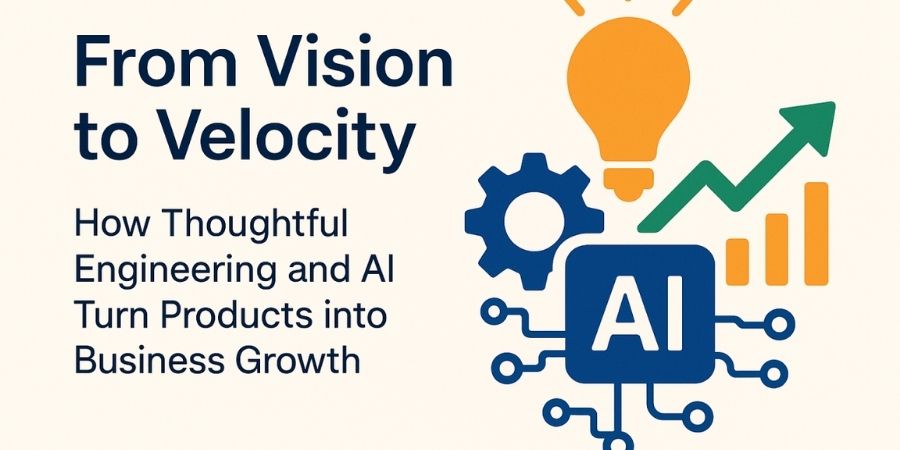
To bridge the gap between long-term vision and real-time velocity across these varied global regions, best-in-class CEOs are abandoning traditional top-down rollouts and focusing their scaling roadmaps on three operational pillars:
Unified Agile Planning: Replacing rigid annual budgeting with rolling, dynamic strategy cycles. This allows capital allocation and operational targets to shift in real-time based on live data feeding back from the collaborative store cloud.
Exception-Based Governance: Moving away from layered, bureaucratic approval chains. Machine intelligence must be trusted to handle the micro-adjustments, leaving the human executive team to focus exclusively on macro-pivots and strategic overrides.
Frontline Orchestration: Shifting the focus of training programs from manual task compliance to agentic orchestration. The frontline must be fully equipped to handle software as a teammate, ensuring a high adoption rate across all store formats.
The Reality Check: Global Industry Insights
The challenge of scaling technology beyond the pilot phase is echoing across the world’s leading strategic institutions:
“While many retailers have successfully deployed localised AI capabilities, the true winners are restructuring their operating models to absorb this intelligence. Scaling strategy to match technological velocity requires a fundamental shift from static planning to dynamic resource reallocation.” > — McKinsey & Company , The Next Horizon of Retail Scale
his sentiment is further matched by technology leaders who emphasize that the ultimate goal of scaling enterprise infrastructure is human empowerment at the edge:
“The next generation of retail scaling isn’t about replacing human judgment; it’s about eliminating the friction that slows it down. When organisations scale their AI strategy effectively, they turn every store associate into an empowered decision-maker, closing the execution gap instantly.” > — Microsoft Retail Hub, Enabling the Intelligent Edge
The Transition Benchmarks: The Metrics of Scale
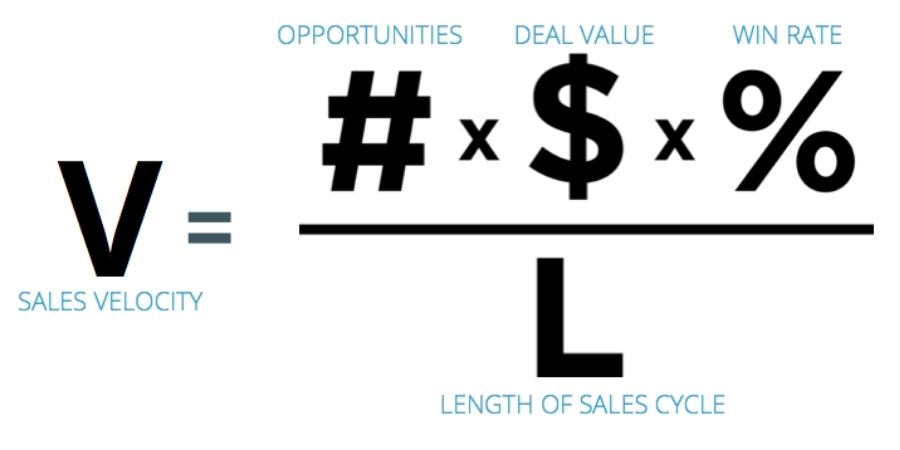
As visualised in our strategic blueprint dashboard, leading organisations successfully navigating the multi-channel transition are benchmarking their progress against three clinical indicators:
Operational Agility Index (+300%): Top-performing retailers have tripled their capacity to absorb localised market shocks, redirect supply lines, and realign store-level tasks without experiencing corporate friction or margin drop-off.
Transition Readiness (94%): Reaching true organisational scale requires clear systemic infrastructure, ensuring that legacy IT constraints and data silos are completely dismantled to achieve near-total system readiness.
Decision-to-Action Velocity (2.1 Min): The definitive benchmark of modern trade—shrinking the operational window from the exact millisecond an anomaly, out-of-stock, or margin threat is detected by AI to its physical resolution on the shop floor.
The 18-Month Reality
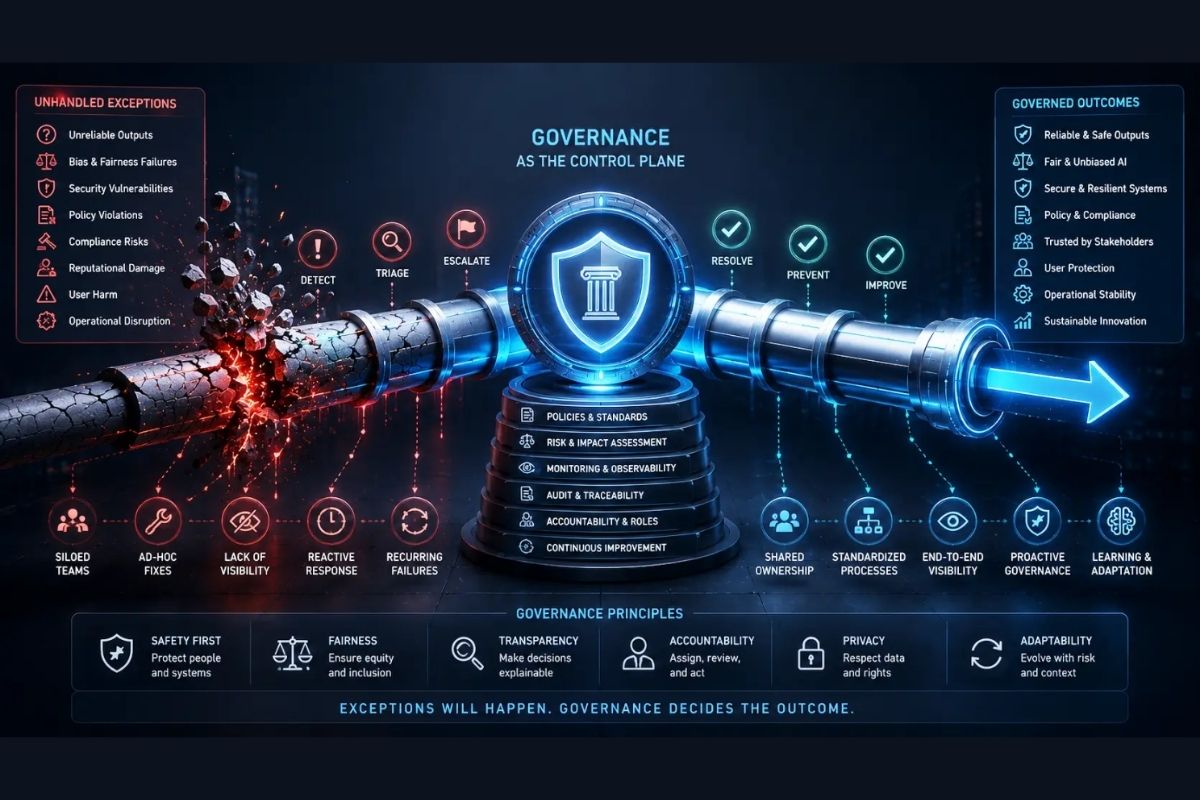
“The 2027 transition will draw a sharp, permanent line between the retailers who merely ‘used’ technology and those who became truly agentic organisations. Velocity is the ultimate defensive moat. By aligning your corporate governance with the speed of your automated frontline, you turn strategy from a static document into a living, breathing competitive weapon. Do not scale the technology to fit your old organisation; scale your organisation to match the velocity of the global future.” Martin Bailie

Week 16–26: The Executive Roadmap
Week 16: The Agentic Discounter – Fusing Value with Autonomous Execution.
Week 17: The Autonomous Supply Chain – Moving to ‘Just-in-Case’ with AI Logic.
Week 18: The Great Decoupling – Sourcing for resilience in a protectionist world.
Week 19: The Cultural Reset – Building ‘Anti-Fragile’ Teams for the Machine Age.
Week 20: 2027 & Beyond – The ‘Holy Grail’ of the Connected Store.
Week 21: The Boardroom Imperative – Measuring the Value of Agentic Sourcing and Margin Defence.
“Week 22: Scaling Strategy to Velocity – Managing the 2027 Transition.”
Week 23: The Circular Mandate – Monetizing Sustainability with RFID 2.0.
Week 24: Social Commerce & The Point of Purchase Revolution.
Week 25: The Sentient Store – Vision AI as the Operational “Eye”.
Week 26: Retail Media – Monetising the Store as a High-Margin Ad Platform.